Showing posts with label Sindhu Kashyaap ( ). Show all posts

Saturday, 29 January 2022

Sequoia Capital India announces Surge 06 with total funding of $60M

Surge, Sequoia Capital India’s rapid scale-up programme, launched its sixth cohort, where Sequoia Capital India and its co-investors invested in 20 early-stage startups, with funding totalling $60 million.


The cohort featured startups belonging to SaaS, Dev Tools, cybersecurity, edtech, D2C, fintech, and agritech sectors, who are leveraging tech to solve some of the biggest challenges faced by consumers and businesses globally. 


According to Sequoia, this batch of startups is geographically diverse. While 50 percent of companies are based in India, it got new entrants from Malaysia, Thailand, and Taiwan, alongwith companies from Bangladesh and Australia.

Surge 06 will kick off on January 27, where founders will go through a rigorous 16-week virtual programme.

Some of the past speakers and mentors in the programme included Ankiti Bose (Zilingo), Ashwini Asokan (vue.ai/Mad Street Den), Binny Bansal (Flipkart), Byju Raveendran (BYJU’S), Doug Leone (Sequoia Capital), Girish Mathrubootham (Freshworks), Kunal Shah (CRED), Nithin Kamath (Zerodha), Sanjeev Bikchandani (InfoEdge), and Vidit Aatrey (Meesho).

“The exceptional calibre and talent displayed by the founders of each new Surge cohort continue to humble us. Every founder brings with them the kind of bold innovation and purpose the world needs to solve some of the most pressing problems today,” said Rajan Anandan, Managing Director, Surge and Sequoia India.

He added, “Many of our companies are building strong, digital foundations that are opening pathways to international markets. We’re excited to be part of our founders’ ambitious journeys as they work towards becoming global businesses of the future.”

Rajan Anandan

Rajan Anandan, Managing Director, Sequoia India

Surge 06 Cohort

Surge 06 featured the largest number of software startups, who focus on cybersecurity, customer engagement, talent development, payments, digital learning, mentoring, retail investing, etc.


At present, two cybersecurity startups are in stealth mode.


Here’s a list of Surge 06 startups:


  • 10 Minute School: 10 Minute School provides affordable and accessible education for K-12 and college students, university admission test candidates, job-seekers, and people looking for specialised skills training in Bangladesh. 


  • Airavana: Airavana reduces privacy risks and improves data security while providing customer data discovery across more than 150 cloud applications. It enables enterprises to manage and protect customers' personal data in consonance with privacy regulations like General Data Protection Regulation (GDPR) and the California Consumer Privacy Act (CCPA). 


  • Aqgromalin: Aqgromalin is building a full-stack agritech platform to help farmers diversify into animal husbandry and aquaculture. The Chennai-based startup provides a data-backed traceable supply chain to farmers, butchers, and meat companies for their poultry, seafood, and livestock needs.


  • BambooBox: AI-powered SaaS platform BambooBox helps companies build high-quality pipelines through engagement across an entire account than a single lead. 


  • BiteSpeed: BiteSpeed is building a conversational commerce stack for D2C brands, which will enable online brands to interact with customers and sell products on apps such as WhatsApp and Facebook Messenger. Using chat as the core communication channel, BiteSpeed solves for the entire ecommerce customer journey, from retargeting to providing shipping updates to customer support.


  • Blend: Blend is on a mission to turn every online seller into an ecommerce pro with an AI graphic design and marketing app that creates product visuals, social graphics, product descriptions, and ads in seconds.


  • Canary Mail: Canary Mail is reimagining email security for modern businesses and individuals. With easy to use email encryption, protection from inbound threats, and human error prevention, Canary Mail delivers 360-degree email security and helps achieve regulatory compliance without compromising on user experience. 


  • Checkbox: Checkbox, a no-code Expert Process Automation (EPA) platform, enables business users to develop their tools and software using intuitive ‘drag and drop’ technology.  


  • Cooby: Cooby is reimagining sales management for a messaging-first world by building the best-in-class engagement and team management solutions on top of popular messaging apps like WhatsApp and LINE. 


  • Grupin: Indonesia-based social commerce platform Grupin offers an interactive community-based shopping experience to consumers, along with the benefit of large discounts on bulk consumer products. 


  • HelloMida: Direct-to-Consumer (D2C) fashion brand HelloMida is built on a real-time retail model that empowers Southeast Asia’s digitally native Gen Z consumers to express and celebrate their individualism.


  • IIMMPACT: IIMMPACT is a one-stop platform for payments and data aggregation for Southeast Asian companies. It aims to help Southeast Asian companies build fintech solutions by providing a full suite of world-class APIs, ranging from mobile top-ups, utility bills, government services, insurance, and travel under one umbrella. 


  • Infina: Retail investing app Infina makes it easy for young tech-savvy Vietnamese to start their investing journey with minimal risk. 


  • Manatal: The end-to-end recruitment and onboarding SaaS platform is on a mission to transform how the world recruits. Using an AI-powered Applicant Tracking System, Manatal helps companies onboard in minutes, leveraging the latest technologies to win the war for talent.


  • Peakperformer: Peakperformer aims to democratise leadership coaching for managers at all levels and help them build behavioural skills in an engaging, measurable, and continuous manner. The digital coaching platform enables organisations to create strong leaders at all career levels.


  • ScanPay: ScanPay aims to help small and medium enterprises (SMEs) accept payments from customers seamlessly using just a smartphone. 
  • Shajgoj Limited: Shajgoj is on a mission to inspire every woman to celebrate beauty with confidence by providing authentic products at reasonable prices from renowned brands and local distributors through its physical stores and online platforms. 
  • Toplyne: Toplyne helps revenue teams at product-led SaaS companies to convert freemium users to paid subscribers. The plug-and-play platform enables sales teams at product-led growth (PLG) companies to identify accounts most likely to convert by analysing user behaviours within a product and determining which users have shown high intent to buy. 

Edited by Suman Singh
Author :- Sindhu Kashyaap ( ) Source :- https://yourstory.com/2022/01/sequoia-capital-india-announces-launches-surge-06-sixth-cohort-rajan-anandan Date :-January 25, 2022 at 06:00AM

[Techie Tuesday] Meet IISc’s Prasanta Kumar Ghosh whose patented speech and voice technology products are helping cancer patients

Prasanta Kumar Ghosh, Associate Professor at the Indian Institute of Sciences (IISc), Bengaluru, has developed several patented voice technology using Artificial Intelligence (AI), Machine Learning (ML), and Augmented Reality (AR). But his love for science and technology developed early on when he was in school.


“As my father days had struggled significantly to get the right education, he made sure that I was well educated and had the right tutoring and mentorship. But what really excited me in my high school days in 1996 was electronics and the work that ISRO was doing then,” Prasanta tells YourStory.


His father was a government employee and his mother was a homemaker. For Prasanta, the aim was to get a job immediately after graduation. Despite his love for the work ISRO was doing at that time, he, however, couldn’t take up the organisation’s offer as he was already working in a different organisation.

“After graduating in electrical engineering from Jadavpur University in 2003, it was exceedingly important for us that I find a job. I had started applying everywhere I could, which gave me job offers from different places, and I started working at Usha Comp Private Limited in Kolkata,” he narrates.
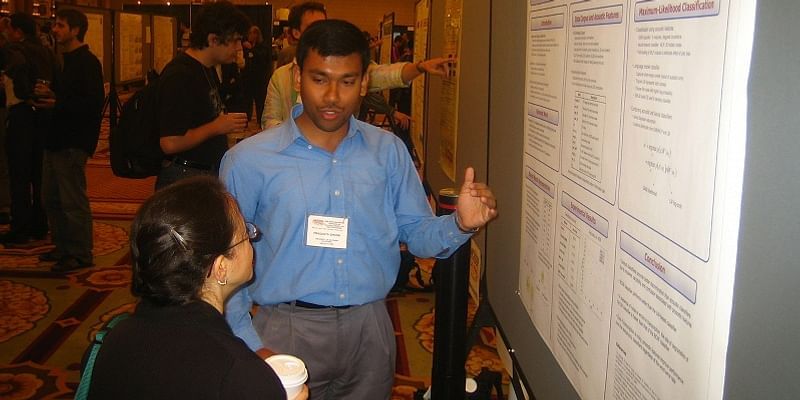
Prasanta Kumar Ghosh

Prasanta Kumar Ghosh presenting poster titled "Automatic classification of question turns

in spontaneous speech using lexical and prosodic evidence" in ICASSP 2008.

The world of research

However, he was never interested in taking up a job and rather wanted to research and work on electrical engineering and newer technologies. “I explained to my father that quitting the job may seem like a tough call, but in the long run, it would pay more dividends,” explains Prasanta.


Thereafter, he attempted the IISc entrance exam to pursue post-graduation studies.


“My rank was 489, thus I missed out on a lot of IITs and even IISc. My friends joined IISc and they kept telling me that there was a vacancy for a research position at the institute. I cleared the exam in 2004, and then was selected for the programme,” he says.


It was during this time that he got an offer from ISRO. While pursuing his MSc at IISc and simultaneously working there, he realised he could build and work on solving significantly larger problems.

“The faculty members at IISc were nothing short of inspirational. Their style of teaching and the way they inspired people to pursue research made me fall in love with the field, and I decided to take on the role of a researcher,” adds Prasanta.

This meant putting in a lot of hard work academically. Despite having a job offer from a startup, Prasanta decided to continue on the academic route. He went on to become a research intern at Microsoft Research India where he focused on the area of audio-visual speaker verification in 2006.

Prasanta Kumar Ghosh

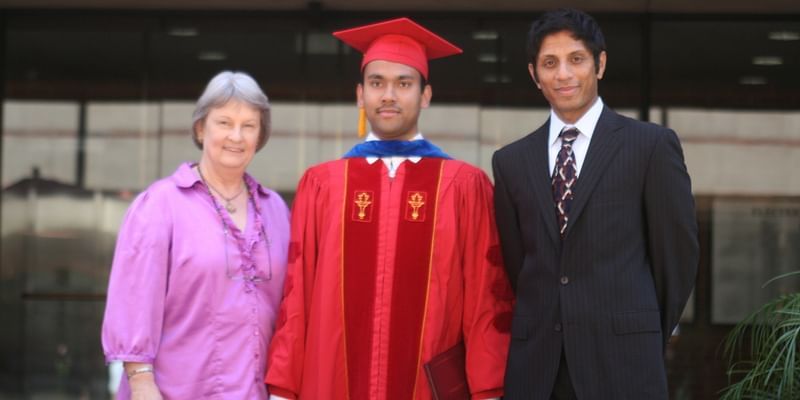
Prasanta Kumar Ghosh on commencement at the University of Southern California in 2011.


Speech compression

“I focused my research and work on speech compression. When you speak on a phone today and record the conversation, the voice is transmitted to your friend after compressing the audio. My work is around non-uniform sampling-based compression. Any waveform can be sampled across three key locations. You don't have to look at the whole signal or all the samples, but the key locations are compressed and reconstructed,” explains Prasanta.


He went on to publish his research which fetched him a thesis award. It also made him realise that he could do more work in the space. “It got me to look at the other options in the field of speech and I started looking at places in the US where I could do my PhD,” he adds.


He went on to receive his PhD in electrical engineering from the University of Southern California (USC), Los Angeles in 2011. It was there he learned how different interdisciplinary work can be done.

Multipdisiplinary approach

“I worked at the intersection of science and technology. I worked with linguists, engineers, mathematicians, and others to build speech-recognition technology. I understood how an FM (frequency modulation) transmitter generates signals and this was the base for understanding how human speech worked,” explains Prasanta.


He also had experience working on a special electromagnetic programme at USC that would record and track the motion of the lips and tongues, and jaw movements while speaking. This further led to building the different voice recognition modules.

“I had this idea when I was at LA which has a large Hispanic population that preferred speaking Spanish than English. I had a project where the speech of the doctor, which was in English, could be translated to Spanish so that the patient could understand them,” he explains.

During 2011-2012, Prasanta was with IBM India Research Lab (IRL) as a researcher. He was also awarded the INSPIRE Faculty Fellowship from the Department of Science and Technology (DST), Government of India in 2012.


“At IBM I worked more around intent classification in speech. For example, if someone asks ‘should I carry an umbrella tomorrow’, they actually want to know the weather for tomorrow,” says Prasanta. He also worked on text analytics and its intent.


He again joined IISc after his stint at IBM. After having worked on speech recognition, the next level was working on audio-visual speech recognition.

“We speak with gestures, and it is important to understand how gestures can create realistic animation. We have an optitrack motion camera device that can record someone’s gestures when they speak, which can help in understanding speech behaviour,” he explains.
Prasanta Kumar Ghosh

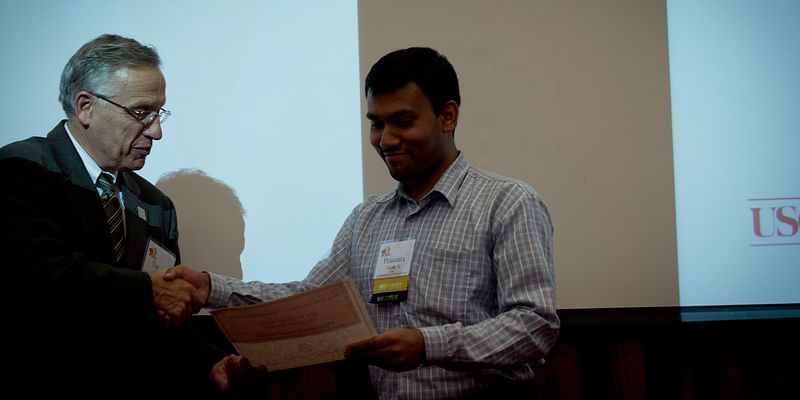
Prasanta receiving honourable mention at MHI Research Festival for paper titled "Processing speech signal using auditory-like filterbank provides least uncertainty about articulatory gestures"

Working on healthcare

Prasanta has also worked with hospitals like NIMHANS, St Johns, Bengaluru, etc. “Using the sound of your voice, we can, for example, try and understand how much the lung is congested. With HCG Hospital, we are trying to understand if you have a problem with your voice box. Many cancer patients have lost their voice box; we are trying to convert their speech into natural speech. Other than that, we are working to detect and improve the condition of patients with neurological problems who have a problem in speaking,” says Prasanta.


Now, he is working on speech recognition and voice technology using AI, ML, and AR. It offers the promise of improving livelihoods, especially in rural parts of India.


However, while India is home to 22 official scheduled languages, and a total of 6,661 mother tongues, leading internet companies in India are currently focusing only on five or six Indian languages.


Although the market is still nascent, the lack of investment in local languages and dialects is one of the fundamental bottlenecks for the growth of voice technology in the country. Prasanta’s project aims at addressing this bottleneck by reaching out to the wider Indian language base and laying the foundation to make it beneficial for the masses.

Advising young techies, Prasanta says, “Find out what you are really passionate about and focus on that. Once you decide to go all out to build and work on your project, find the support of the right people. Anything you do today needs multiple people coming together, and then everything will fall in place.”

Edited by Kanishk Singh

Author :- Sindhu Kashyaap ( ) Source :- https://yourstory.com/2022/01/techie-tuesday-iisc-prasanta-kumar-ghosh-speech-recognition-ai-ml Date :-January 25, 2022 at 05:55AM

[Funding alert] Darwinbox turns unicorn; raises $72M in Series D round led by Technology Crossover Ventures

Hyderabad-based HRtech startup Darwinbox raised $72 million in a funding round led by Technology Crossover Ventures (TCV), along with participation from existing investors Salesforce Ventures, Sequoia India, Lightspeed India, Endiya Partners, 3One4Capital, JGDEV, and SCB 10X.


The company’s valuation post the Series D round has crossed the $1 billion mark, with the total investment raised thus far crossing $110 million. The company has grown 200 percent since the last fundraise from Salesforces Ventures, around a year ago.


Founded in late 2015 by Chaitanya Peddi, Jayant Paleti and Rohit Chennamaneni, Darwinbox aims to use the funds for global expansion by accelerating its platform innovation agenda, strengthening its product, engineering, and customer success teams, along with scaling its go-to-market (GTM) presence in South Asia, Southeast Asia, and MENA (Middle East and North Africa).


The team added that they aim to take Darwinbox public by 2025.

Darwinbox

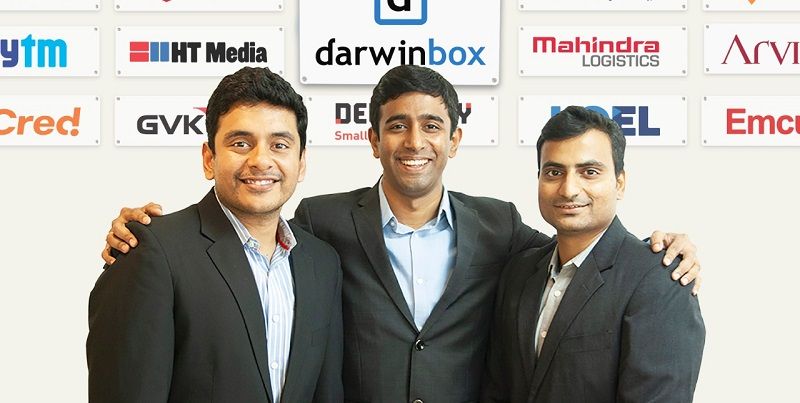
Darwinbox co-founders

Turning unicorn

In a conversation with Shradha Sharma, Founder and CEO, YourStory, Rohit, Jayant, and Chaitanya spoke about Darwinbox’ journey to becoming a unicorn. When asked what does the coveted status means for the team, Rohit said,

“It is a milestone; we will feel happy about it for maybe a day, but after that, it is going back to business. It is just a milestone and not the destination. The journey has been a humbling one, with customers believing and taking bets on us at different stages. Also, our employees took the faith and belief in Darwinbox in the early days, and the right investors came at the right time.”

The new unicorn is a cloud-based HRtech platform that caters to an organisation’s HR needs across the employee lifecycle, including recruitment, onboarding, core transactions (leaves, attendance, directory), payroll, travel and expenses, employee engagement, performance management, rewards and recognition, and people analytics.


The new-age platform combines highly configurable workflows, intelligent insights, and smart interfaces to help enterprises unleash the true potential of their workforce.


“Valuations are an outcome and these are generally tough to handle. What we can control is the product. Building for extraordinary agility and delivering stellar employee experience have been critical in defining success for Darwinbox’s customers. We will continue to invest in new and innovative technology to deliver a frictionless experience for the work-from-anywhere workforce,” said Chaitanya.


The trio worked for the likes of McKinsey and EY, as well as their clients, and realised that those companies did not have the best HR systems. The main asset for these companies were the people, and they needed the best systems for HR.


So, they decided to start Darwinbox in 2015 with an investment of less than Rs 30 lakh. Their first breakthrough came in the form of Delhivery. Now, the company is expecting the overall team to grow by 100 percent and is also preparing to launch in the US this year.

Darwinbox founders

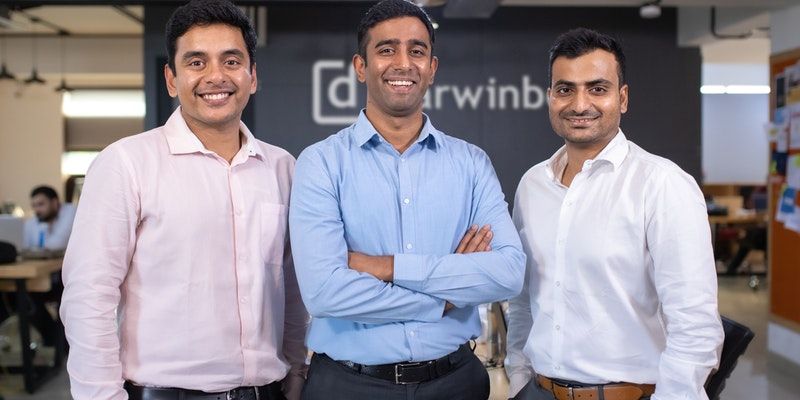
Darwin co-founders Rohit, Jayant, Chaitanya

Building for the employee

“Among those who gave initial feedback was Mohandas Pai, an early investor in the startup, who said, ‘if you are building something in the HR space, can you build something for the employee? At least someone needs to build for them.’ Many previous HR systems have been built for the IT function, but our system touches everyone in the company – from the CEO to the fresher,” explained Jayant.


He added that the idea is to focus on what kind of problems you are solving for the last mile. “It was this hypothesis that gave us the courage to go head-on against larger giants who possibly have funds that can rival the GDP of a small nation,” he added.

"Investing behind technology to manage talent has become inevitable for organisational success. Darwinbox demonstrated the ability to build agile, innovative, and user-friendly solutions along with deep customer-centricity – which has made them a platform of choice for several leading enterprises,” added Jessica Neal, former Chief Talent Officer at Netflix, and a Venture Partner at TCV.

Adding further, Chaitanya said, “The product’s focus is on solving the challenges of people function in large and diverse organisations with complex structures using the best of technologies. We will invest heavily in further strengthening our platform, especially our analytical layer with AI and ML capabilities to aid decision-making.”

Competing with giants

The founders said what helped them in their journey was keeping up with the pace of change happening around them. They added that agility and building around customer needs are important for success.


The company also stated that over 1.5 million employees from large conglomerates, fast-growing technology giants, and leading global brands like Nivea, Starbucks, Dominos, T-Systems, AXA, Tokio, Cigna, JSW, Adani, Vedanta, Mahindra, Kotak, NSE, Ujjivan, Makemytrip, Swiggy, and Tokopedia were able to adapt to the new normal with Darwinbox.


“SaaS is a new opportunity today, and it is India’s next big opportunity for the world. It is a convergence of multiple factors coming together – talent, ability to sell, and multiple things coming together at the same time,” Jayant said.


Edited by Kanishk Singh

Author :- Sindhu Kashyaap ( ) Source :- https://yourstory.com/2022/01/hrtech-saas-startup-darwinbox-unicorn-series-d-funding-valuation Date :-January 25, 2022 at 06:00AM

Thursday, 27 January 2022

[Funding alert] Swiggy raises $700M investment led by Invesco at a valuation of $10.7B

Foodtech unicorn Swiggy has raised $700 million in funding led by Invesco, six months after it raised $1.25 billion. Swiggy is now valued at $10.7 billion, up from its previous $5.5 billion.


The round also saw participation from a host of new investors such as Baron Capital Group, Sumeru Venture, IIFL AMC Late Stage Tech Fund, Kotak, Axis Growth Avenues AIF-I, Sixteenth Street Capital, Ghisallo, Smile Group, and Segantii Capital.


Swiggy’s existing investors Alpha Wave Global (formerly Falcon Edge Capital), Qatar Investment Authority, and ARK Impact, along with its long-term investor Prosus also participated in the round. This investment comes at a time of accelerated adoption of food and online grocery and a rise in consumer demand for Swiggy’s services.

“The GMV our food delivery business achieved in 40 months, took Instamart just 17 months, demonstrating the platform benefits of Swiggy. We will double down on this to build more categories in line with our mission of offering unparalleled convenience to Indian consumers,” said Sriharsha Majety, CEO, Swiggy.
Venture capital funding

Justin Leverenz, Chief Investment Officer, Invesco Developing Markets Fund, said, “As long-term investors, the Invesco Developing Markets fund seeks investment opportunities in the best companies in the world, led by world-class management teams, and that has the potential for long-term structural growth. Our investment in Swiggy represents such an investment.”


In a statement, the company claimed that while the food delivery business has nearly doubled in gross order value (GOV) in the last year, this fundraise will enable Swiggy to further accelerate growth on the core platform and make meaningful investments to grow Instamart.


It added that Instamart is set to reach an annualised GMV run rate of $1 billion in the next three quarters. The company will also further strengthen its investments in the broader ecosystem.

“Our goal is to make Swiggy a platform that 100 million consumers can use 15 times a month. We will continue to invest in our people, products, and partners to create a positive impact on the ecosystem and accelerate the digital transformation in food and grocery delivery and other on-demand services,” Sriharsha added.

In the last few months, Swiggy has expanded Instamart, its quick commerce grocery service to 19 cities. Swiggy Genie, its pick up and drop service, is currently present in 68 cities while its meat delivery service and daily grocery service Supr Daily are present across all major Indian cities.


It also launched Swiggy One, a comprehensive membership programme with benefits across food, groceries, and other on-demand services by Swiggy. With multiple growth catalysts in place to drive its continued expansion, Swiggy is well-positioned for 2022 and beyond.


Edited by Saheli Sen Gupta

Author :- Sindhu Kashyaap ( ) Source :- https://yourstory.com/2022/01/funding-alert-swiggy-raises-700-m-investment-led-b Date :-January 24, 2022 at 02:17PM

[Funding Alert] Ola Electric raises $200M at a valuation of $5B

Bhavish Aggarwal founded Ola Electric is now valued at $5 billion after the electric two-wheeler manufacturer raised $200 million from Tekne Private Ventures, Alpine Opportunity Fund, and Edelweiss, among others.


Speaking on the development, Bhavish Aggarwal, Founder and CEO, Ola Electric, said,

“Ola Electric is creating India’s EV revolution and is driving cutting-edge manufacturing from India for the entire world. With Ola S1, the best scooter ever made, we’ve changed the entire scooter industry and are now looking forward to bringing our innovative products to more two-wheeler categories, including bikes as well as cars. I thank the investors for their support and look forward to partnering with them to take the EV revolution from India to the world.”
Venture capital funding

Last December, the EV maker had raised $500 million through a Term Loan B (TLB) from marquee institutional investors, which received a staggering response from investors, with interest and commitment of about $1.5 billion.

Over the last 12 months, Ola Electric has built the Futurefactory — the world’s largest two-wheeler manufacturing facility — and Ola S1 scooters, a disruptive Direct-to-Consumer model with fully digital purchase, coupled with home test rides, doorstep delivery, and after-sales service.

The Tamil Nadu-based Futurefactory, which can employ over 10,000 women at full capacity, is said to be the world’s largest women-only factory and the only all-women automotive manufacturing facility globally.


Today, Ola continues to move the world to sustainable mobility through its ride-hailing platform and advanced electric vehicles manufactured at its Futurefactory, dedicated to transitioning the world to sustainable mobility and making the world better than we found it.


Edited by Suman Singh

Author :- Sindhu Kashyaap ( ) Source :- https://yourstory.com/2022/01/ev-startup-unicorn-ola-electric-funding-raises-200m-valuation-5-bhavish-aggarwal Date :-January 24, 2022 at 02:21PM

Monday, 24 January 2022

[Funding alert] StanPlus raises $20M in Series A round led by HealthQuad, Kalaari Capital, and HealthX Capital

The emergency response company Stanplushas raised $20 million in Series A funding  from marquee investors, including HealthQuad, Kalaari Capital, and HealthX Capital Singapore.


Pegasus (Hiranandani family office), Sandeep Singhal (Avaana), and Prashant Malik also participated alongside a clutch of angel investors.Veda Corporate Advisors were exclusive advisors to StanPlus and its shareholders.


The funding will be used to scale up operations and reduce ambulance ETA from 15 minutes to eight minutes.


Prabhdeep Singh, Founder and CEO, StanPlus, said in a conversation with YourStory, "Our aim to raise such a large round of funding is to create large-scale impact. We will be building deep technology, hiring people, and scaling geographically. The healthcare market today is significantly fragmented.

“While we live in a world of quick commerce with essentials getting delivered in 10 minutes, ambulance services and tele-consultancy services still aren't available within 10 minutes. We want to scale across 15 cities, and bring out the best in people, tech, ambulances, and air ambulances to meet a promise of eight minutes."


This is the largest Series A funding raised in the healthcare sector. Overall, the capital infusion will be leveraged to scale up StanPlus’s operations to 500 hospitals, and launch its flagship Red Ambulance brand in 15 cities from the current five.


The end goal is to bring the ambulance ETAs down to eight minutes from the current 15 minutes (for StanPlus) and less than 40 minutes on average by other ambulance service providers. Its hybrid fleet model allows for a quick scale-up while maintaining world-class clinical standards.


"We cannot build a tech platform without building or looking at the core infrastructure in a country like India. We are not just an aggregation platform; we have a rapid emergency response layer that works on first principles that ensures that people get the right service, backed with the right layer of technology," said Prabhdeep, who founded StanPlus in 2016 along with Antoine Poirson and Jose Leon.

StanPlus

Prabhdeep Singh, Founder and CEO, StanPlus

Tech-enabled emergency response

Charles-Antoine Janssen, CIO, HealthQuad Capital, said, “With an inadequate and inefficient medical emergency response system (ERS) currently in India, our case fatality rates for road traffic accidents, cardiac, and neurological emergencies remain significantly higher than those of the developed world, largely due to the lack of efficient retrieval systems during the “Golden Hour”.


"StanPlus has developed an innovative, tech-enabled platform to effectively address emergency responses and manage timely ambulance dispatches through its fleet of Red Ambulances, thus addressing the above deficiencies. We believe that this model could be rapidly scaled up across the country and has the potential to save millions of lives in the coming years. We are excited to back the company and look forward to supporting its objective of building quality ERS across India.”

StanPlus' goal is to organise India’s emergency medical response (EMR) with the use of technology, trained personnel, and a multi-city fleet of ambulances for both critical and non-critical care.

It standardises hospital ambulances, private operators, government-run services, and mom-and-pop ambulances through a unified tech platform. It also runs its own fleet of Advanced Life Support (ALS) ambulances.


"Our ambulances are present in hospitals across different parts of the country, which makes us well equipped to reach any emergency situation within the eight minutes we have planned. We have partnered with hospitals across the five cities we are operational in to manage their medical response systems, and patient transportation needs. We now have to replicate this model in 15 cities," Prabhdeep said.

Full-stack medical assistance

The emergency response industry in India is valued at $15 billion. Addressing the gaps in the highly fragmented market, StanPlus has created the Red Health platform to allow large hospitals, employers, health-apps, wearables, cars, and any other ecosystem player to enable plug-and-play medical response.


StanPlus has top-of-the-line equipment and trained paramedics on board. Its doctors and drivers are trained to handle varying kinds of patient needs, from accident/burn victims and cardiac emergencies to surgery patients, and so on.

The full-stack medical assistance company takes care of everything, from “software and hardware to the telephony systems, drivers, and paramedics to make our network completely seamless”.

“We are also creating our own training modules for clinical and non-clinical staff,” Prabhdeep said.


The startup also is working with corporates and enterprises to aid in the emergency response for their employees.


Vani Kola, MD, Kalaari Capital, said, “Over the last two years, we have witnessed first-hand the importance of efficient healthcare infrastructure in India. While there has been a lot of buzz around quick commerce and 15-minute grocery delivery, StanPlus is one company making 15-minute emergency healthcare services a reality in India. We at Kalaari are humbled and proud to be a part of StanPlus very early on and are excited about the disruption [it] will bring to emergency healthcare.”


Edited by Teja Lele Desai

Good Glamm Group enters organic BPC category by acquiring majority stake in Organic Harvest

D2C unicorn The Good Glamm Grouphas acquired a majority stake in Organic Harvest, India’s largest ECOCERT-certified beauty and personal care brand. The Good Glamm Group will be investing a further Rs 75 crore in growing the brand. This marks the entry of Good Glamm Group into the organic BPC category.


Started in 2013 by Rahul Agarwal, Organic Harvest will continue to work as an independent entity. Over the years, the brand has catered to over two million customers across 10,000 pin codes in India.


Organic Harvest’s Founder and CEO Rahul Agarwal will work closely with Darpan Sanghvi, Priyanka Gill, and Naiyya Saggi, Co-founders of Good Glamm Group, along with Sukhleen Aneja, CEO, Beauty and FMCG Brands, Good Glamm Group, to accelerate Organic Harvest’s presence in India and globally.


Darpan Sanghvi, Group Founder and CEO, Good Glamm Group, said, “Rahul has created India’s largest and most innovative portfolio of ECOCERT-certified organic beauty and personal care products and we are incredibly excited to leverage the Good Glamm Group’s digital reach and content assets to allow millions of consumers in India to discover the amazing brand and products.”


As part of the Good Glamm Group, Organic Harvest will be able to leverage the group’s large digital audience comprising 88 million POPxo annual users, 100 million users of ScoopWhoop, and Baby Chakra’s 20 million-strong mothers’ community, 10,000-doctor network, and 1.5 million Good Creator Co influencers.


The Good Glamm Group and Organic Harvest partnership came about based on a shared vision of the founders: to leverage content-to-commerce to exponentially grow the organic BPC category. Organic Harvest has predominantly been an offline-first brand.


Rahul Agarwal, CEO, Organic Harvest, said, “Our vision is to make this world a better and beautiful place to live in and leave it better than we found it. For us, it was always about taking the concept of organic personal care products to the substantial mass population of India and across the globe. With this partnership, our aspiration to become the world’s largest organic personal care company seems to be easily achievable. I am super-excited to be a part of the group, and do some exceptional work with all co-founders.”

D2C brands

Leapfrogging D2C capabilities

Organic Harvest will have access to data-driven insights from the group’s content platforms into what consumers are looking for along with a strategic approach towards influencer marketing with Good Creator Co.’s full stack of influencer marketing services and solutions that are backed by data, technology, and influencer and content expertise.

These campaigns will be integrated into Organic Harvest’s product development engine to accelerate the creation, launch, and marketing of products across skin and personal care.

With the commerce stack that Good Glamm Group has built out and scaled, Organic Harvest will further leapfrog its D2C capabilities and will launch products online and offline across the country.


This acquisition is a continuation of the Good Glamm Group’s approach to acquiring innovative and fast-growing beauty brands in all the important categories of beauty and personal care, and powering them with a content-to-commerce strategy. 


Edited by Teja Lele Desai

[Funding alert] Dental care startup Smiles.ai raises $23M in Series A investment

Healthcare startup Smiles.ai has raised $23 million in Series A funding led by Alpha Wave Incubation (AWI). The round also saw participation from existing investors Sequoia Capital India and Chiratae Ventures.


Other investors in the round include MBX Capital, Wami Capital and angel investors Peyush Bansal and Amit Chaudhary, Co-founders, Lenskart; Aakrit Vaish, Co-founder and CEO, Haptik; Revant Bhate, Co-founder, Mosaic Wellness; Miten Sampat CSO, CRED; and Sambhav Rakhyan, MD, WTW. Smiles.ai marks US-based healthcare-focused fund MBX Capital's first investment in India.


Smiles.ai will deploy this funding towards expanding its footprint nationally, strengthening the leadership team, and building innovative tech-driven dental care solutions.


“India’s dental care market has remained highly fragmented and without any significant technological disruption for decades. However, now with increasing awareness, increasing disposable income, and rising millennial aspirations, the industry is going through a transition and we are leading this change in India by combining dental care, operations, and technology expertise, ” said Hitesh Kakrani, Co-founder, Smiles.ai.


The Series A funding comes within a year of the company raising a $1 million seed round co-led by Sequoia Capital India and Chiratae Ventures with participation from some reputed angels and family offices.


Speaking on the investment, Anirudh Singh, Managing Director, Alpha Wave Incubation, said, “Given the massive opportunity in the dental care space in India and abroad, we were very impressed with the Smiles.ai’s approach in establishing a comprehensive offline base of dentists and building an aligners business on top of that.

“Using technology as a key driver and differentiator, Smiles is poised to disrupt the market and establish itself as a market leader while maintaining its capital efficiency. Lastly, we believe the opportunity here is global and we will work with the company to take them to other markets such as the Middle East and North Africa.”
Smiles.AI

Growing market

Smiles.ai was founded in 2019 by Hitesh Kakrani and Dr Jatin Kakrani. The startup leverages proprietary technology and expert healthcare professionals to provide access to high-quality and cost-effective dental care products and services.


The platform offers a range of services through online consultation, clinic network, and at-home services. With over 100+ specialist doctors, Smiles.ai serves over 3,000+ patients and conducts 5,000+ diagnoses every month, across Bangalore, Delhi-NCR, Pune, and Indore.

Dr Jatin Kakrani said, “With technology as the backbone of our operations, we are able to provide pre-purchase clarity, best-in-class care, and billing transparency to consumers with end-to-end support during the entire process. We will continue to invest in newer surgical technologies and skilled doctors to provide world-class treatment and experience to our consumers.”

The Series A funding will enable the company to cater to a larger user base in existing cities and expand its footprint across new cities in India. A significant amount of the fund will be invested in technology and to further strengthen the leadership team.

The dental care startup also plans to establish a presence in GCC by 2022 where it has initiated the process of setting up a subsidiary. It has also provisioned a chunk from the current round of investment for the same.

“We believe that the dental care vertical has the potential to create a valuable healthcare company, with a substantial improvement in customer experience. The Smiles.AI team has the right combination of a medical and a business background. We, at Sequoia Capital India, are impressed by their execution till date and excited to support them,” said Ashish Agrawal, MD, Sequoia India.


Ranjith Menon, Managing Director, Chiratae Ventures, added, “The dental care market in India is valued at $4-5 billion, growing at 15 percent CAGR. This is driven by a young population’s increasing awareness of health and aspiration to look better. Technology adoption and digitisation will lead the transformation of dental practice putting patient convenience and comfort at the centre in delivering products and services. We are excited to continue our support to the vision put forward by the team at Smiles.ai.”


Edited by Teja Lele Desai